Iceland's magnificent landscapes demand respect. Weather extremes, severe windstorms, and unexpected physical conditions can transform a dream holiday into a logistics nightmare within an hour. This comprehensive safety dashboard details everything you need to know about navigating active Iceland camper storm warnings, interpreting road status networks, and accessing medical care as an international visitor.
1. Essential Digital Safety Framework (App Downloads)
Before you turn the ignition key on your motorhome, download these localized applications. Standard weather apps do not account for local microclimates or specific wind funnels created by Iceland's volcanic ridges.
The core application for safety in Iceland. Monitors live weather maps, transmits location checkpoints to search and rescue services (ICE-SAR), and tests your driving knowledge of Icelandic terrains.
The official emergency positioning tool. When triggered during an alert, it auto-transmits your satellite GPS coordinates directly to the Icelandic Emergency Command Center, helping teams locate your camper van even if data lines drop.
2. Road Status, Closures & Environmental Hazards
The authoritative map system for vehicle passage is managed by the Icelandic Road Administration (Vegagerðin) at umferdin.is. Never attempt to guess if a road is passable based on clearing skies overhead.
| Hazard Term | What it Indicates | Campervan Operational Guidelines |
|---|---|---|
| Ófært (Impassable) / Lokað (Closed) | The route is entirely blocked by deep snow, debris, or severe safety threats. | Prohibited Do not enter. Driving past a road closure sign voids your vehicle insurance entirely and leaves you liable for rescue team operation costs. |
| Hálkublettir / Hálka (Slippery Patches / Ice) | Black ice or compressed sheet ice on the road surface. Common during sudden temperature swings. | Reduce speeds immediately. High-profile vehicles lose control faster than regular passenger cars due to asymmetric wind loading. |
| Sandstorm (Blowing Sand & Ash) | Dry winds picking up volcanic basalt sand, primarily along the South Coast plains. | Can strip the custom paint and window tint completely off the camper. If caught, drive exceptionally slowly or track down a sheltered parking location. |
| Unbridged Rivers (F-Roads) | Glacial river crossings without structural bridge support. | Extreme Risk Standard motorhomes are strictly forbidden from these tracks. 4x4 camper setups should only cross if the river depth is checked manually and water flow is safe. |
💨 The Wind Threshold Rule Matrix
Because campervans carry large side surface areas, you must adhere strictly to these wind vectors:
- Sustained Wind 0 - 14 m/s: Routine operational conditions. Normal caution required.
- Sustained Wind 15 - 19 m/s: High risk for motorhomes. Drop travel speed. Expect strong steering wheel pulling. Avoid mountain passes.
- Wind Gusts Exceeding 20 m/s: Stop Driving Safely park your campervan immediately. Wind vectors at this velocity can tip campers over or rip doors off hinges.
3. Tourist Health Matrix: Medical, Clinical & Dental Emergencies
If you experience sickness, injury, or unexpected physiological issues while operating your mobile camper, the national medical framework is modern and readily accessible to foreign visitors.
🏥 Primary Emergency Hospitals
For trauma, acute severe illness, or major accidents, there are two primary emergency hospitals operating 24/7 emergency rooms (Bráðamóttaka):
- Landspítali University Hospital (Reykjavík): Located at Fossvogur, 108 Reykjavík. The main trauma center for the entire country.
- Akureyri Hospital (Sjúkrahúsið á Akureyri): Located at Eyrarlandsvegur, 600 Akureyri. The premier medical support facility servicing North Iceland.
🩺 Non-Emergent Care & Health Clinics (Heilsugæslan)
If you need to see a general doctor for minor illnesses (e.g., infections, prescription renewals, minor cuts), look for the local public medical center named Heilsugæslan. They are stationed in every major town along the Ring Road.
| Service Portal | Contact Line | Operational Guide For International Tourists |
|---|---|---|
| General Medical Advice | 📞 1700 (+354 544 4113) | 24/7 medical hotline answered by registered nurses. Call this line to locate the nearest doctor on duty or determine if you require an emergency room visit. |
| Acute Emergency Service | 📞 112 | Reserved exclusively for life-threatening situations, serious accidents, fires, or vehicle crash incidents. Free to dial from any network. |
| Heilsuvera Health Portal | Online Chat Only | Accessible via web browser at heilsuvera.is. Includes a real-time web-chat staffed by triage health experts during daylight hours. |
🦷 Acute Dental Emergencies (Tooth Pain / Fractures)
Dental clinics are private in Iceland, and costs are paid out of pocket at the time of care. If you suffer an agonizing toothache, broken crown, or mouth trauma while out on the road:
- Reykjavík Dental Emergency Watch (Tannlæknavaktin): Located inside the capital area. Operates dedicated emergency walk-in clinics outside normal working hours (weekdays 8:00–22:00, weekends 10:00–20:00). Contact them via their updated portal at tannlaeknavaktin.is.
- Outside the Capital: If you are far along the East Fjords or North Coast, call the 1700 medical helpline. The on-duty nurse maintains a direct internal contact ledger for local regional dentists who offer off-hours emergency assistance.
4. Mitigating Expenses and Safety Protocols
European Citizens should always present their EHIC (European Health Insurance Card) alongside a valid passport at any hospital or public clinic to ensure they are billed at identical rates to local residents. Citizens from outside Europe (including the US and Canada) should verify that their comprehensive travel insurance covers standard emergency medical transport and outpatient care.
📋 Pre-Drive Checklist Summary
- Verify weather patterns for your exact routing trajectory via Vedur.is.
- Check the coloration codes on Umferdin.is to ensure no segments are flagged closed.
- Confirm your 112 Iceland positioning transmission utility is updated and active.
- Ensure your vehicle fuel tank is maintained above 50% capacity if high wind warnings are anticipated; idling your vehicle engine keeps the structural internal heaters running if you are stranded on the road.
- The Window-Check Trick: Before unbuckling your seatbelt or opening any cabin doors, roll your driver-side window down slightly. Use your hand to physically test the exact direction and brutal force of the wind before stepping out.
- Park Facing DIRECTLY Into the Wind: When parking in high winds, always point the nose of the camper straight into the gale. This reduces cabin body sway and prevents crosswinds from throwing the vehicle off balance while stationary.
- The Two-Hand Door Lock: Never let a car door swing open freely. Always hold the door frame firmly with both hands when exiting or entering. Icelandic wind gusts can instantly bend mechanical hinges backward, causing thousands in uninsurable damage.
- Obey the 15 m/s and 20 m/s Rules: It is highly recommended to stop driving a high-profile camper when sustained wind speeds reach 15 m/s. If winds hit 20 m/s or higher, it is strictly unsafe—pull over and park immediately.
- Slow Down Early for Gravel Transitions: When transitioning from smooth asphalt to loose gravel roads, drop your speed drastically beforehand. Campers lose traction rapidly on loose gravel, and hitting the transition too fast will cause you to lose control.
- Master Single-Lane Bridges: Iceland has hundreds of single-lane bridges. The rule is first-come, first-served: the vehicle closest to the bridge has priority. Slow down to 50 km/h, check for oncoming traffic, and yield if another vehicle is closer.
- Expect Sudden Sheep Sprints: Sheep roam freely all over Iceland's roadsides during summer. If you see them near the tarmac, slow down immediately. They are unpredictable and will frequently bolt directly into the path of your oncoming camper at the last second.
- Never Stop on Road Shoulders for Photos: Iceland’s roads are narrow and often lack structural shoulders. Stopping dead on the asphalt to take a photo creates an extreme hazard for vehicles behind you. Always wait until you find a designated, marked pull-out or parking lot.
- Keep Headlights Switched On 24/7: Icelandic law dictates that your vehicle headlights must be completely turned on all year round, day and night. Do not rely on your camper's "Auto" setting, as it often fails to turn on the rear tail lights during foggy day conditions.
- Ditch the Schedule and Kill the Cruise Control: Never use cruise control during severe wind gusts or wet road conditions—you need real-time, manual engine control. If a weather warning is issued, be flexible. Altering your route or waiting it out is always cheaper than a rescue.
When an active gale warning hits, you cannot simply pull over onto an empty gravel field or farm track to sleep out the storm. Doing so breaks Icelandic conservation laws and results in steep local fines.
Sleeping overnight in a motorhome, camper van, or vehicle with a rooftop tent is strictly illegal anywhere outside of officially designated camping zones. Even in an emergency wind scenario, you must do your best to reach a town or a localized camp area where your vehicle is shielded from high-velocity gusts.
- The Off-Season Challenge (September to May): The majority of general campsites in Iceland close their gates completely during the winter. Attempting to navigate into a closed campground can leave you stranded in unplowed deep snow drift zones without electricity or functional services.
- Utilize the Real-Time Camp Locators: Do not guess which campsites are open. Use the official, live trackers to locate facilities that feature year-round open zones, electric hookups to run your camper heater, and solid indoor cooking rooms.
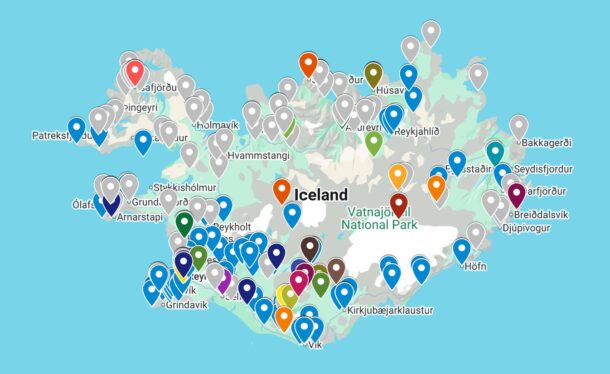
The primary index for campground locations, operational seasons, pricing maps, and basic infrastructure details across Iceland.
Open Tjalda MapsThe standard processing application used to pay for campground spaces, overnight parking tickets, and hookup utilities via mobile.
Open Parka Camping- Park Close to Service Buildings: If wind alerts cross 18 m/s, park the nose of your camper facing directly into the wind, ideally positioning your vehicle on the leeward side of a concrete camp toilet block or large communal building to block the impact of side gusts.
- Leave Your Pop-Top Roof Closed: If your camper features an expandable pop-top canvas roof structure, keep it securely locked down during a wind alert. High winds will tear the canvas materials apart or damage the mechanical lift stabilizers.